Key Takeaways
- An open-plan home design enhances natural light and creates a sense of spaciousness.
- This approach encourages social interaction and supports flexible, multi-functional spaces that can adapt to evolving needs.
- Potential challenges include reduced privacy as well as increased noise and clutter visibility.
- Design strategies such as zoning with furniture and lighting, smart storage, and layered materials can help define spaces while maintaining a cohesive look.
A Practical Look at Open Layouts
In Singapore’s compact living environments, open-concept design has become a go-to solution for maximising both light and space. Known for its fluidity, spatial openness, and contemporary appeal, this modern home layout has transformed how we experience the spaces we live in. But before you commit to major renovations or Addition and Alteration (A&A) works, it’s important to consider whether an open setup is right for your home. Let’s find out.
What Are the Advantages of an Open-Plan Design?

1. Maximises Space and Light
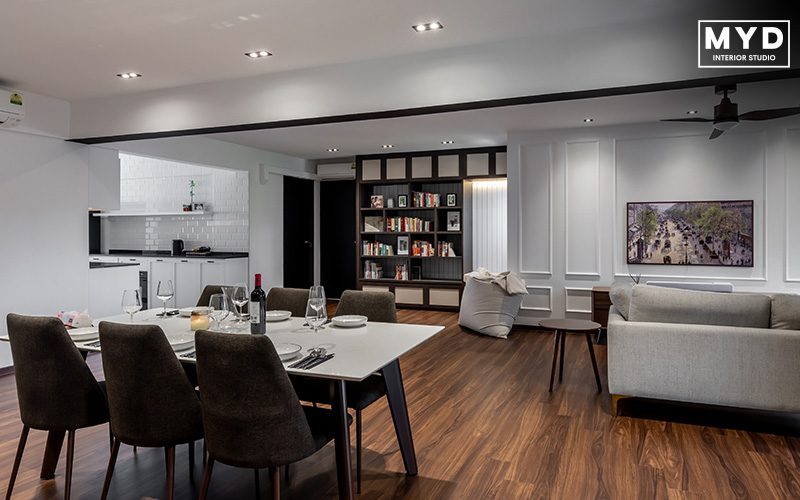
Few design approaches light up a home quite like an open concept. Without walls, light flows freely across the home, instantly expanding the perceived size of the space. This is especially valuable in interior design for HDB flats, where every square metre matters. Elements like continuous flooring, a unified colour palette, and clear sightlines further amplify the openness, creating a seamless, expansive feel throughout the home.
2. Encourages Social Interaction
In an open-plan layout, the boundaries between cooking, dining, and lounging dissolve, creating a shared space where life unfolds more naturally. Whether you’re preparing meals while chatting with family or entertaining guests in a relaxed setting, open living spaces can support a more fluid and connected way of life.
3. Adapts to Modern, Flexible Living
Flexible living spaces are becoming a necessity in many compact homes in Singapore. With a wall-less design, you can easily adapt zones to suit your evolving needs—a play area by day, a reading corner by night, or a remote workspace when required.
Reasons Why an Open-Concept Home Might Not Be for You
1. Lack of Privacy
With an open design plan comes a trade-off: fewer quiet, enclosed corners. In homes where multiple family members coexist—sometimes across generations—privacy can become a challenge. Moments for rest, work, or personal time may be harder to come by, especially when daily routines overlap. Without designated zones, the home can feel less restful and more exposed.
2. Increased Sound and Visual Exposure
Open spaces are inherently lively, but they also carry more noise and visible activity. Without walls to absorb sound, acoustics can become an issue, particularly in households with children, pets, or shared workspaces. Clutter may also become harder to conceal.
How to Make Open-Concept Living Work for You

If you’re drawn to the versatility of an open layout but the potential drawbacks give you pause, you’re not alone. The good news is that with careful planning, this design approach can create a home that’s both visually beautiful and highly functional.
Here are three expert strategies to follow:
1. Create Invisible Boundaries With Intentional Design
Open-concept does not mean undefined. Establish clear zones through thoughtful use of layout and visual cues. For example, align your sofa and rug to frame a distinct living area, or suspend a pendant light to anchor the dining space. These subtle boundaries maintain flow while still giving each area its own sense of purpose, helping the space feel organised and intentional.
2. Elevate Storage Beyond Utility
In an open layout, storage is no longer tucked away—it becomes part of the visual landscape. Consider full-height cabinetry with clean lines, kitchen islands with integrated drawers, or bespoke media walls that double as shelving. When designed with care, storage solutions not only hide clutter but also help to elevate the overall aesthetic.
3. Use Materiality and Texture to Add Sophistication
Without walls to break things up, surfaces and materials play a crucial role. Contrast sleek finishes with warm timber, soft upholstery with polished stone, or matte textures with reflective glass. These combinations are great for creating depth and visual richness, allowing each zone to feel layered and connected.
Final Thoughts: Is an Open-Plan Design Right for You?
An open-concept design can be elegant, efficient, and deeply rewarding—but it isn’t a one-size-fits-all solution. It’s about designing a space that works with your life, not against it. If you’re unsure whether it suits your needs, engaging an experienced interior design consultancy in Singapore can make all the difference.
At MYD Interior Studio, we blend creative vision with practical insight, whether we’re designing for compact HDB flats or expansive landed homes. Whether you’re renovating for the very first time or reimagining a familiar space, our team is here to guide you from start to finish.
Get in touch with us today.